If you’re dreaming of wildlife encounters and wide-open landscapes, there’s no place quite like Alaska. From roaming moose to powerful bears, the state is bursting with unforgettable wildlife moments waiting to happen. There’s so much to see in Alaska’s incredible animal kingdom.
This guide explores the best places to spot Alaska’s Big Five — bears, moose, caribou, Dall sheep and wolves — along with other must-see wildlife. Whether you’re planning a self-guided Alaska wildlife safari or joining an expert tour, you’ll find practical tips, fun facts and some lesser-known treasures along the way.
Photo Credit: ©State of Alaska/Michael DeYoung
Where to See Bears in Alaska: See Bears in Katmai and Wrangell-St. Elias
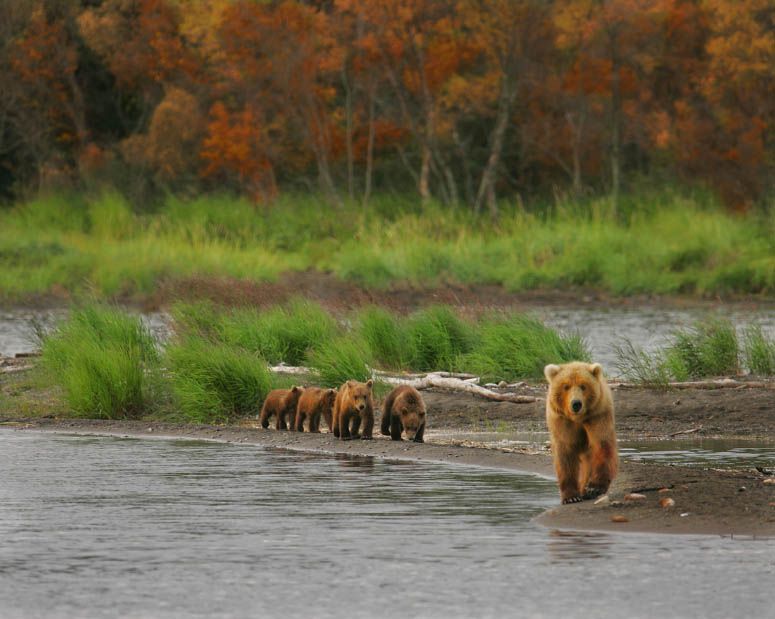
Alaska is one of the top destinations in the world to see bears in nature, with both black and brown bears roaming freely across much of the state. Each region offers a unique viewing experience with world-famous photo ops and chances to see animals in their element.
Katmai National Park
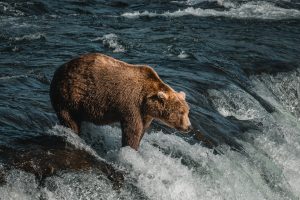
Katmai is maybe the most famous brown bear-viewing location in Alaska, thanks to the internet-favorite Fat Bear Week, a livestreamed competition tracking the weight gain of bears scarfing down salmon and berries in preparation for the long winter.
The best bear-watching in Katmai is at Brooks Falls, where each summer, dozens of brown bears gather to catch leaping salmon in their powerful jaws. This natural display of strength and agility is a dream for photographers and wildlife watchers alike. Visitors can watch all the action from a two-tiered platform by the falls.
This remote park can’t be accessed by car. If you want to make the visit, plan well in advance.
Wrangell-St. Elias National Park

If you’re looking for a more accessible alternative to Katmai, Wrangell-St. Elias is a fantastic option. As the largest national park in the U.S., its rugged terrain offers habitat for both black bears and brown bears, especially near salmon-rich areas like the Copper River.
Know your bears: Alaska is home to three species of bear: brown, black and polar. You won’t find polar bears in the wild south of the Arctic Circle, but brown and black bears make their homes all across the state. Here are some helpful tips on telling them apart:
- Brown bears (also called grizzlies) are usually larger, with a distinct shoulder hump and rounded ears.
- Black bears tend to be smaller, with straight facial profiles and no shoulder hump — but don’t be fooled by color alone. Black bears can be brown, cinnamon or even blonde.
Be bear aware: Keep at least 100 yards of distance from all bears. They move faster than you think! Traveling with a guide is always recommended.
Where to See Moose in Alaska: See Moose in Denali and Beyond
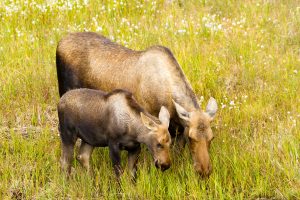
Photo Credit: ©State of Alaska/Michael DeYoung
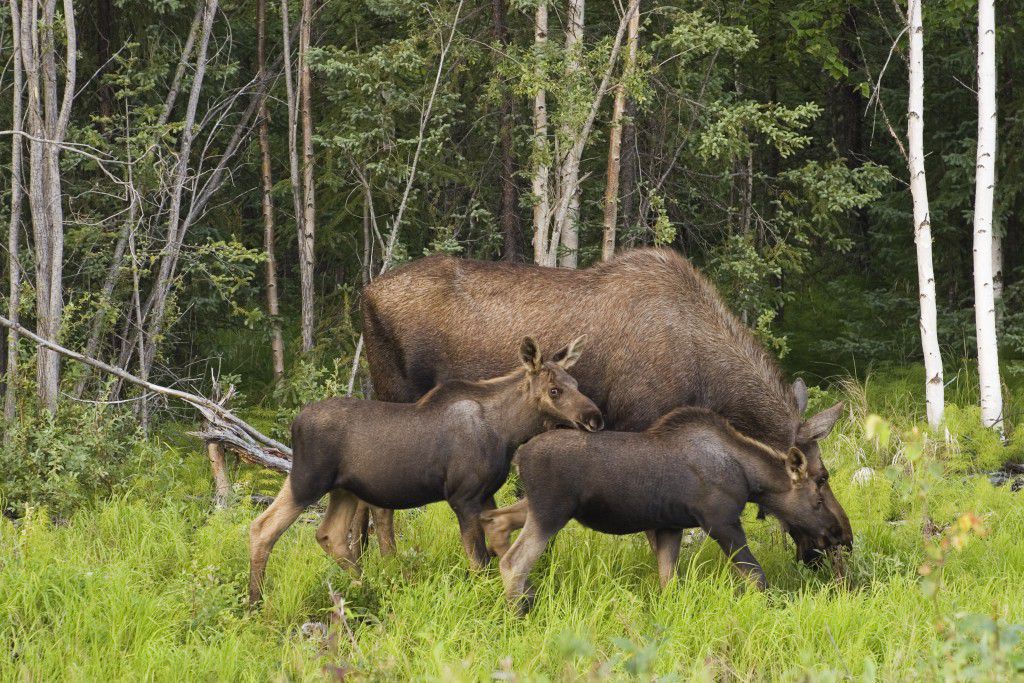
Moose are the most widely distributed of Alaska’s Big Five — and the easiest to spot. These massive mammals are visible across the state in all seasons, from the untapped wilderness to bustling downtowns. But for wildlife enthusiasts hoping to see moose in their true element, Denali National Park offers an incredible front-row seat.
In Denali, moose frequent the first 15 miles of Park Road, especially in spring and fall. You might spot them near the Denali Visitor Center. During rutting season in early fall, male moose gather to compete in sparring matches, making for dramatic (but safe!) viewing.
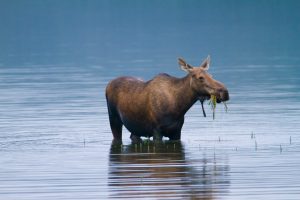
Photo Credit: ©State of Alaska/Michael DeYoung
Fun fact: Moose can dive over 20 feet underwater in search of aquatic plants — don’t be surprised if you see them taking a dip!
Where to See Caribou in Alaska: See Caribou in Denali and Nome
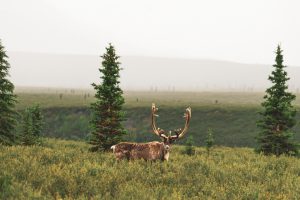
Caribou are one of Alaska’s most iconic animals. With their sweeping antlers and long-distance migrations, these creatures add a sense of movement and magic to the tundra.
Nome
For a truly off-the-beaten-path caribou encounter, head north to Nome, located on the Seward Peninsula in Northwest Alaska. This remote region is home to the Western Arctic Caribou Herd, one of the largest in North America. In late summer and early fall, the animals migrate across the tundra and river valleys around Nome, often visible from accessible gravel roads.
Wildlife viewers can rent a vehicle and drive out of town, where the wilderness offers chances to see not only caribou, but musk oxen, foxes and raptors. Nome’s wide-open landscapes, modern amenities and comparatively light visitor traffic make it ideal for spotting wildlife at your own pace.
Denali National Park
Denali National Park is home to several caribou herds, and it’s the premier location to spot caribou in Alaska. You’ll often see them in alpine areas like Highway Pass and Thoroughfare Pass during spring and early summer, although small groups occasionally roam closer to the park entrance.
Fun fact: Caribou are the only deer species in which both males and females grow antlers. Males shed theirs in the fall, while females keep theirs through the winter.
Where to See Dall Sheep in Alaska: Spot Them on Mountain Ridges
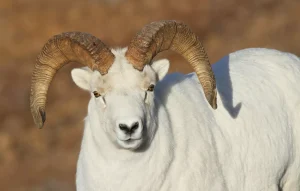
Photo credit: NPS/Jared Hughey
Dall sheep, with their bright white coats and dramatic curled horns, are a favorite for wildlife watchers exploring the higher elevations of Alaska’s national parks.
In Denali National Park, look for these sure-footed creatures on ridges near Polychrome Pass or on the mountains overlooking Igloo Canyon, where their coats stand out against the darker terrain.
They’re also found in Wrangell-St. Elias, particularly in alpine areas. Bring binoculars — they can be hard to spot!
Fun fact: A Dall sheep’s horns never stop growing. You can estimate their age by counting the growth rings, much like counting tree trunks.
Where to See Wolves in Alaska: See Wolves in Denali and Katmai
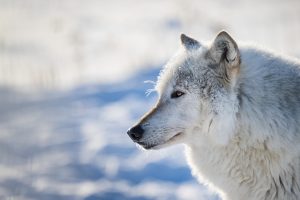
Wolves are Alaska’s most mysterious members of the Big Five. Highly intelligent, social and difficult to spot, they live in packs and roam across vast distances.
Denali National Park is considered one of the best places in North America to see wolves in the wild. The best strategy? Take a guided Park Road bus tour, which covers different habitats and increases your chances of seeing wolves.
Holland America Denali Lodge is the perfect launch point, located just two miles from the park’s entrance.
You can also spot wolves in Katmai National Park. In such a remote area, wolf packs thrive undisturbed.
Fun fact: Wolves can hear up to six miles away in the forest and over ten miles in open tundra. They can also travel up to 30 miles in a single day.
More to See: Alaska’s lesser-known wildlife
Along Alaska’s rugged coastlines, you’ll find an array of wildlife unlike anything in Interior Alaska.
Kenai Fjords National Park is home to colonies of puffins, as well as Steller sea lions and harbor seals. You can visit by boat from nearby Seward.
Puffins love nesting on the Beehive Islands, where the cliffs are alive with activity in summer. Tufted puffins have golden head feathers, while horned puffins sport bright orange beaks and fleshy “horns” during breeding season.
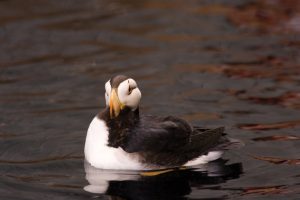
©State of Alaska/Michael DeYoung
Steller sea lions — once called “seawolves” by Russian colonists — weigh up to 2,400 pounds and haul out on rock ledges along Resurrection Bay. Look for them lounging or barking near No Name Island or Emerald Cove.
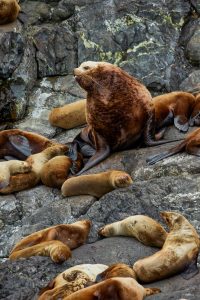
Harbor seals are quieter, but no less adorable. In early fall, they often rest on icebergs or shoreline boulders while molting. Try Thumb Cove or Bear Glacier Lagoon.
Guided tours often combine puffin spotting with views of glaciers, seals, bald eagles and even whales. Kenai Fjords National Park is a great place to see whales in Alaska — with chances to spot humpback whales, gray whales, fin whales and orcas by boat or shore.
Viewing Tips
- Bring binoculars. They make a world of difference!
- Go early or late in the day, when animals are most active.
- Book guided tours when possible — they increase your odds and ensure safety.
- Be patient. Nature moves at its own pace, but the payoff is worth it.
Alaska’s animals are closer than you think
There’s no shortage of places to see animals in Alaska — from the snowy shoulders of Denali National Park to the seal-studded shores of the Kenai Peninsula. With the right timing, a good pair of binoculars and a little bit of patience, you’ll find yourself face-to-face with some of the most magnificent creatures on Earth.
Whether you’re chasing Alaska’s Big Five or just hoping for a glimpse of a puffin mid-dive, there’s an adventure waiting for you.
Ready to explore? Start planning with Holland America Hotels.